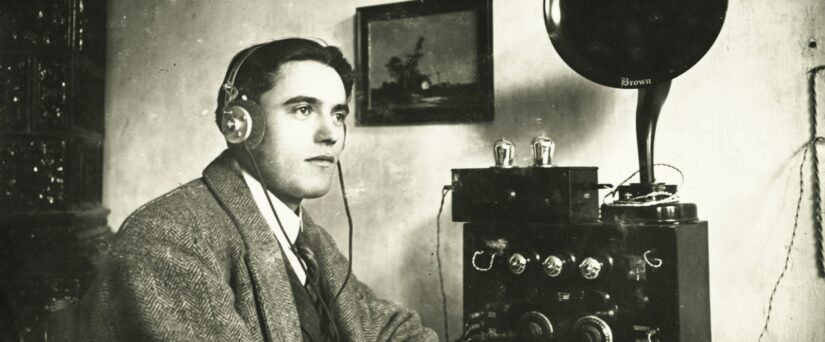
On 1 December 1925, 100 years ago, Hungarian Radio began regular broadcasting. However, the history of Hungarian broadcasting began earlier, on 15 February 1893, with the launch of the Telephone News Service, whose founder was the Hungarian inventor Tivadar Puskás. Unfortunately, Puskás died shortly after the service was launched, on 16 March 1893. His company was bought by István Popper, who attracted external investors and floated it on the stock exchange in 1896. Telephone News Agency Ltd. The paper paid a dividend of 2.5 crowns on its 100-crown face value in 1897 and 1898, but no one wanted to sell it, so no bonds were really created, and trading ceased in 1903.
Telefonhírmondó was initially a programme broadcast via the telephone network and then via its own cable network. It is linked to the history of the stock exchange in that, from the outset, it broadcast stock market data every hour, as well as a summary of the performance of foreign stock exchanges in the evenings. While the press generally reported exchange rates with a one-day delay, Telefonhírmondó reported them within an hour, allowing investors to react within the same day. Stock market news was sometimes broadcast even during regular programming, but this did not please everyone, as evidenced by this contemporary article:
“There is a Telephone Newsletter still one secret. This a signal. As many as station only there is In Budapest, from allhow many at once speaks. Something peculiar buzzer spice-like sound this, which warns. During the day this a alert sign then speak meg, awhen something important news, interesting event give before yourself, or such surprise getting ready from subscribers for, which from occasion gave birth suddenly, castlelanul. Let's say, that one famous singer morning eldecide yourself, that at noon a few song ad before a Telephone Newsletter on his way. A audience difficult would be about this notify, however many people would regret, if fail to do this. A signal do it now this a service and a few minute under from whole town you know, that we is being prepared, when. But big service fulfil evening. Even a past in the year a lot complaint given reason, that a popular theatre lectures a Frankfurt stock exchange because of interrupt. This a stock exchange report large-bonedaccuracy and from subscribers big part interested in, on the other hand annoyed those, those who more appreciate a Mountain Aranka or Küry Klára singing from whole stock exchangeat noon. From operatic at lectures this a interruption still more unpleasantly affected would be, but helps on it a signal. Simply wait for a Frankfurt telegram arrival After a first break, lecture publicin often indicate, that now audible a frankfurti courses. This in a jiffy end there is, webefore still from finger act began would be s with this both half who there is satisfied. On our necks from autumn cold evenings. Search a company, a temper everywhere, kinchat deserves, a who to our house bring it.” – excerpt from the 16 October 1896 issue of Magyarország.
The programme for a day in 1897 is shown in the table below (source: Hód-Mező-Vásárhely, 7 November 1897):
9:30—10:00 Agenda, Viennese and foreign news, (fullfon-notification) at night came telegrams. Hivatalos sheet news.
10:00 a.m.— 10.30 Stock exchange report.
10:30—11:00 Newspaper review, more interesting news, telegrams.
11:00 a.m.— 11.15 Stock exchange report.
11:15—11:30 Local and theatrical news. Sport.
11:30 a.m.— 11.45 Stock exchange report.
11:45 —12.00 National Assembly, rural and foreign news.
12:00—12:30 National Assembly, courtly, political, military news.
12:30 p.m.— 1.30 Stock exchange report.
1.30— 2.00 From so far read interesting news repetition.
2.00— 2.30 National Assembly, judicial news, tá-flowers.
2.30— 3.00 National Assembly, local news, telegrams.
3.00— 3.15 Stock exchange report.
3.15— 4.00 Accurate time, weather, parliament, interestlesser discs, forensic and mixed news.
4.00— 4.30 Stock exchange report.
4 30— 5.00 Vienna newspapers news. Financial and gaseconomic news.
5.00— 5.30 Theatres, sport, art, fashion, irosong, programmes. Local mixed news, telegrams.
5.30— 6.30 From English, French and Italian language ordermultiple presentation and teaching and however: 5.30— 6.00 English language: on Monday, on Wednesday, on Friday. 6:00 a.m.— 6.30 French: Monday, Wednesday, Friday 6.30— 6.30 Italian language: Tuesday, Thursday, Saturday,
7.00 at point or from Opera House, or a Peopletheatre lectures can be heard.
Contemporary photographs clearly show the telephone and the iron stands holding the telephone news cables on the roof of the stock exchange building on Szabadság Square:
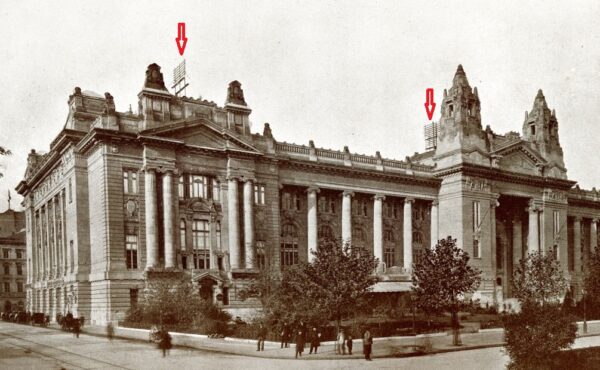
István Popper later sold Telefon-Hirmondó to Magyar Távirati Iroda Rt., which renamed it Magyar Telefonhirmondó és Rádió Rt. With the advent of radio technology, cable distribution was gradually replaced by broadcasting. The last subscribers to Telefonhírmondó were hospitals, when the service was finally discontinued in 1945.
Numerous programmes have been produced to mark the centenary, providing further information on the early and later history of radio for those interested in the subject.