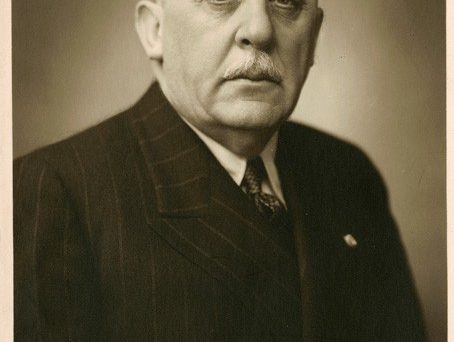
Dr. Leó Buday-Goldberger Budai
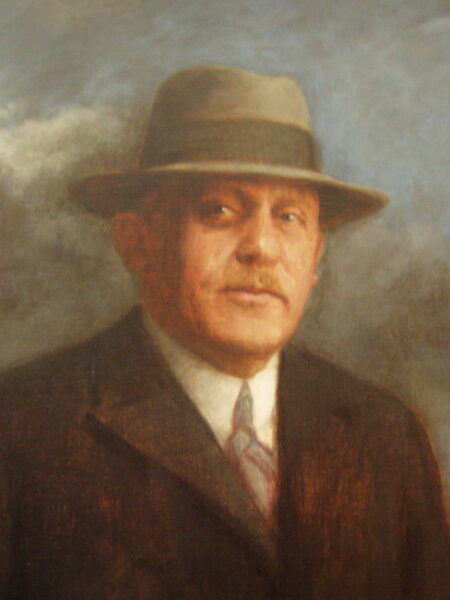
Dr. Leó Buday-Goldberger did not necessarily intend to pursue a career in the textile industry, as he had chosen to study law. However, in 1899, his brother Antal Goldberger, who had obtained a degree in chemical engineering in Switzerland and was to succeed their father, Berthold Goldberger, died unexpectedly. But this was not to be.
Goldberger León therefore had to join the family business in 1899 and quickly learn the textile trade. This was urgent because the family business was undergoing its greatest transformation at the time, which included the conversion of the general partnership into a joint-stock company in 1905 with the assistance of the Hazai Bank. The new Goldberger Sám. F. és Fiai Rt. employed 600 workers, and Leó Goldberger became a member of the board of directors and managing director, then CEO from 1908. For his achievements, he was awarded the Officer's Cross of the Order of Franz Joseph in 1911, at a relatively young age.
However, the early 1910s were not a successful period for the blue dyeing and printing company. The company began to make losses, the Hazai Bank considered withdrawing its support, and there were calls for Leo Goldberger to be removed from the helm of the company. However, this did not happen, Leó persevered, and eventually the First World War brought an upturn, and the business became profitable again.
During the Soviet Republic, Leó Goldberger, who completely rejected left-wing ideas, fled to Switzerland with his family, where he was able to take a considerable amount of wealth with him. After the fall of the commune, he returned home, only to find his flat at 45 Benczúr Street, then still called Nagy János Street, completely ransacked.
From 1920, as president and CEO, he expanded the product range and even made his business partially independent from external suppliers by using yarn and textiles manufactured within the company. The patent for artificial silk and the introduction of the „Parisette” brand of textiles were a huge success. He took over the company with 400 employees, and by 1931, this number had risen to 2,600. In 1923, the governor awarded him the rank of chief advisor.
The next two decades were a period of prosperity and social recognition for Goldberger. He established good relations with the country's top leadership and had business dealings with Miklós Horthy Jr., who was also involved in the textile trade. He participated in charitable activities with the governor's wife. His social recognition was also helped by his membership in the Reform Masonic Lodge.
By the 1930s, both the factory and Leó Goldberger were enjoying great success. With a keen sense of PR, he celebrated the company's 150th anniversary in 1931, not only with numerous press reports, but also with a special book about the company's history, to which he wrote the foreword. He published his own account of his trip to America, where he travelled in 1936 to find new markets for his products.
He made a conscious effort to gain as much social recognition as possible for himself and his family. In 1929, he joined the Revision League with his entire factory and donated a total of 2,800 pengős to its causes. From 1932, he was a member of the upper house as a delegate of the National Association of Industrialists, as well as president of the National Association of Hungarian Textile Manufacturers, a member of the board of GYOSZ and the Hungarian Foreign Trade Institute, chief advisor to the Hungarian National Bank, and president of the Hungarian-American Chamber of Commerce.
He also maintained good relations with the Horthy family. He became acquainted with Miklós Horthy Jr., who was also involved in the textile trade, through business, while he became closer to the governor's wife through charity work.
Goldberger was a true industrial magnate and behaved as such in all circumstances. On the one hand, he was a tough factory manager who cared deeply about his employees, but he also paid attention to the smallest details, not only in the factory, but also in his family. According to recollections, Leó Goldberger, who spoke several languages, was a very cultured man who loved literature, especially Goethe.
He donated a significant portion of his enormous fortune to charity, primarily supporting social institutions of his own denomination, but he also contributed to many other charitable causes, sometimes anonymously, but often publicly. In 1931, when the company celebrated Leó Goldberger's 30th anniversary, he donated 50,000 pengős for the construction of a home for the children of employees and workers.
He spent his summers at his estate in Szentendre, which his wife had developed into a model farm. He married his wife, Ida Popper, in 1901, and it was a true love match. During their courtship, Leó Goldberger was capable of cycling up to 25 kilometres to meet her, there and back. In addition to their three children, they also raised the child of his wife's deceased brother.
Until 1940, he held a significant position in the leadership of the Jewish Community, but resigned from this position in 1940 due to internal disputes.
Goldberger was a vain man who expected respect from all his subordinates and was usually addressed as "Doctor". He also had a quick temper, which is why some of his colleagues resigned several times due to the company manager's behaviour. He requested daily reports on the factory's activities, even during his trips abroad, in letters, and wanted to know everything.
His good connections, his repeated commitment to the government and government programmes, and his membership of the upper house until 1943 exempted him for a long time from the Jewish laws, which he constantly spoke out against. Not only did he speak out against the laws, but he also did everything he could to protect his fellow believers who were discriminated against, and he protected his own colleagues for as long as he could. However, he could not have imagined that he, a right-wing conservative who repeatedly emphasised his Hungarian identity, was extremely proud of it, and maintained good relations with those in power, could be harmed. He experienced increasing discrimination in his own life; for example, he was unable to keep his estate in Szentendre, and attempts were made to oust him from the management of his factory. He prepared for a better future, made business plans for after the war, and in 1941 moved into his new building at 4 Vörösmarty Square, which had been built on the site of the building he had previously purchased.
Although he had been warned of the danger well in advance – one of his colleagues was an agent of the British secret service and had also asked him to leave the country – he did not believe that this was true, so he was shocked and shaken when, on 19 March 1944, the first day of the German occupation, he was taken to Mauthausen. He could not comprehend that his Christian friends and politics would not save him.
Since he also refused to transfer significant assets abroad earlier, his family was unable to pay the $100,000 demanded by the SS for his release.
Many reports say that in Mauthausen (where he was prisoner number 65354) he behaved like a arrogant big shot, wrote „promissory notes” and „contracts” in exchange for better care and favours, and tried to buy his survival with money (which he obviously did not have, so he resorted to credit).
He lived to see the liberation of the camp, but on the day of liberation, he died on 5 May 1945 as a result of shock caused by suddenly eating too much food after starvation.
Points of interest
He was a passionate horseman, but in 1937 he suffered a riding accident. Despite being treated by the best doctors and spending a lot of time at the Siesta rehabilitation institute, his leg never fully recovered, and he limped for the rest of his life.
Of his three children, Antal and Friderika settled into the company's life and found their place in the empire their father had created, but the second-born, Miklós, was a real black sheep. He accumulated debt upon debt and did not pay child support for his child. His father paid off his debts, which at times amounted to 50,000 pengő, but in 1940 he finally excluded him from his will, stipulating that Miklós could not inherit any property, only the usufruct, and in 1941 he even placed him under guardianship.
After the war, many people approached the Goldberger family with the papers and promises that Leó Goldberger had made in Mauthausen. There was even a case that went to court. Izidor Kohn, who had done a great deal of service for the elderly Leó Goldberger in the concentration camp, filed a lawsuit because he was in possession of a promissory note signed by Leó Goldberger and certified by two witnesses, According to this document, upon their return home, Kohn would receive 50,000 Swiss francs or a position as director of the factory. In the event of his death, he obliged his heirs to give Kohn 25,000 Swiss francs worth of Hungarian currency from his estate. The heirs gave Izidor Kohn personal property, valued at 5,000 forints according to Kohn and 15,000 forints according to the heirs. The lawsuit was initiated because of the difference.
Literature:
- Ildikó Guba: “Death is not a programme” The life of Leó Buday-Golberger Óbuda Museum 2014
- Miklós Vécsey: One Hundred Notable Hungarians (Budapest, 1931)
- László Kállai: The 150-year-old Goldberger factory. History of the Hungarian textile industry 1784-1934 (Budapest, 1935)
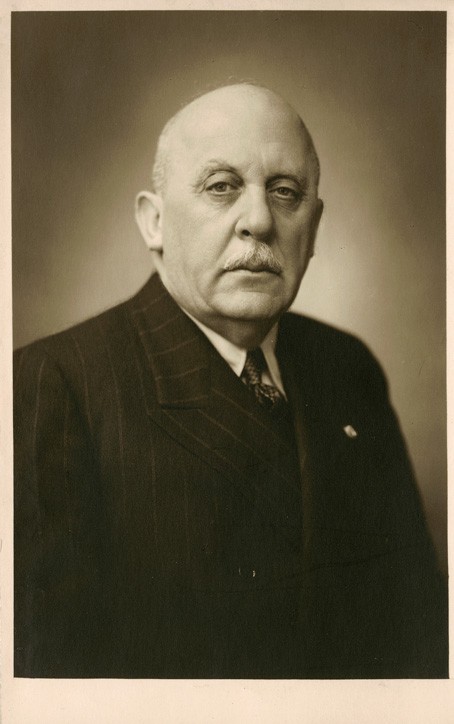
Born: 1878.05.02.
Place of birth: Budapest
Date of death: 1945.05.05.
Place of death: Mauthausen
Occupation: lawyer, company director
Parents: Berthold Goldberger, Friderika Herzl
Spouses: Ida Popper
Children: Antal Buday-Goldberger Miklós Buday-Goldberger Friderika Buday-Goldberger
Author: by Domonkos Csaba
Born: 1878.05.02.
Place of birth: Budapest
Date of death: 1945.05.05.
Place of death: Mauthausen
Occupation: lawyer, company director
Parents: Berthold Goldberger, Friderika Herzl
Spouses: Ida Popper
Children: Antal Buday-Goldberger Miklós Buday-Goldberger Friderika Buday-Goldberger
Author: by Domonkos Csaba
Dr. Leó Buday-Goldberger Budai
Dr. Leó Buday-Goldberger did not necessarily intend to pursue a career in the textile industry, as he had chosen to study law. However, in 1899, his brother Antal Goldberger, who had obtained a degree in chemical engineering in Switzerland and was to succeed their father, Berthold Goldberger, died unexpectedly. But this was not to be.
Goldberger León therefore had to join the family business in 1899 and quickly learn the textile trade. This was urgent because the family business was undergoing its greatest transformation at the time, which included the conversion of the general partnership into a joint-stock company in 1905 with the assistance of the Hazai Bank. The new Goldberger Sám. F. és Fiai Rt. employed 600 workers, and Leó Goldberger became a member of the board of directors and managing director, then CEO from 1908. For his achievements, he was awarded the Officer's Cross of the Order of Franz Joseph in 1911, at a relatively young age.
However, the early 1910s were not a successful period for the blue dyeing and printing company. The company began to make losses, the Hazai Bank considered withdrawing its support, and there were calls for Leo Goldberger to be removed from the helm of the company. However, this did not happen, Leó persevered, and eventually the First World War brought an upturn, and the business became profitable again.
During the Soviet Republic, Leó Goldberger, who completely rejected left-wing ideas, fled to Switzerland with his family, where he was able to take a considerable amount of wealth with him. After the fall of the commune, he returned home, only to find his flat at 45 Benczúr Street, then still called Nagy János Street, completely ransacked.
From 1920, as president and CEO, he expanded the product range and even made his business partially independent from external suppliers by using yarn and textiles manufactured within the company. The patent for artificial silk and the introduction of the „Parisette” brand of textiles were a huge success. He took over the company with 400 employees, and by 1931, this number had risen to 2,600. In 1923, the governor awarded him the rank of chief advisor.
The next two decades were a period of prosperity and social recognition for Goldberger. He established good relations with the country's top leadership and had business dealings with Miklós Horthy Jr., who was also involved in the textile trade. He participated in charitable activities with the governor's wife. His social recognition was also helped by his membership in the Reform Masonic Lodge.
By the 1930s, both the factory and Leó Goldberger were enjoying great success. With a keen sense of PR, he celebrated the company's 150th anniversary in 1931, not only with numerous press reports, but also with a special book about the company's history, to which he wrote the foreword. He published his own account of his trip to America, where he travelled in 1936 to find new markets for his products.
He made a conscious effort to gain as much social recognition as possible for himself and his family. In 1929, he joined the Revision League with his entire factory and donated a total of 2,800 pengős to its causes. From 1932, he was a member of the upper house as a delegate of the National Association of Industrialists, as well as president of the National Association of Hungarian Textile Manufacturers, a member of the board of GYOSZ and the Hungarian Foreign Trade Institute, chief advisor to the Hungarian National Bank, and president of the Hungarian-American Chamber of Commerce.
He also maintained good relations with the Horthy family. He became acquainted with Miklós Horthy Jr., who was also involved in the textile trade, through business, while he became closer to the governor's wife through charity work.
Goldberger was a true industrial magnate and behaved as such in all circumstances. On the one hand, he was a tough factory manager who cared deeply about his employees, but he also paid attention to the smallest details, not only in the factory, but also in his family. According to recollections, Leó Goldberger, who spoke several languages, was a very cultured man who loved literature, especially Goethe.
He donated a significant portion of his enormous fortune to charity, primarily supporting social institutions of his own denomination, but he also contributed to many other charitable causes, sometimes anonymously, but often publicly. In 1931, when the company celebrated Leó Goldberger's 30th anniversary, he donated 50,000 pengős for the construction of a home for the children of employees and workers.
He spent his summers at his estate in Szentendre, which his wife had developed into a model farm. He married his wife, Ida Popper, in 1901, and it was a true love match. During their courtship, Leó Goldberger was capable of cycling up to 25 kilometres to meet her, there and back. In addition to their three children, they also raised the child of his wife's deceased brother.
Until 1940, he held a significant position in the leadership of the Jewish Community, but resigned from this position in 1940 due to internal disputes.
Goldberger was a vain man who expected respect from all his subordinates and was usually addressed as "Doctor". He also had a quick temper, which is why some of his colleagues resigned several times due to the company manager's behaviour. He requested daily reports on the factory's activities, even during his trips abroad, in letters, and wanted to know everything.
His good connections, his repeated commitment to the government and government programmes, and his membership of the upper house until 1943 exempted him for a long time from the Jewish laws, which he constantly spoke out against. Not only did he speak out against the laws, but he also did everything he could to protect his fellow believers who were discriminated against, and he protected his own colleagues for as long as he could. However, he could not have imagined that he, a right-wing conservative who repeatedly emphasised his Hungarian identity, was extremely proud of it, and maintained good relations with those in power, could be harmed. He experienced increasing discrimination in his own life; for example, he was unable to keep his estate in Szentendre, and attempts were made to oust him from the management of his factory. He prepared for a better future, made business plans for after the war, and in 1941 moved into his new building at 4 Vörösmarty Square, which had been built on the site of the building he had previously purchased.
Although he had been warned of the danger well in advance – one of his colleagues was an agent of the British secret service and had also asked him to leave the country – he did not believe that this was true, so he was shocked and shaken when, on 19 March 1944, the first day of the German occupation, he was taken to Mauthausen. He could not comprehend that his Christian friends and politics would not save him.
Since he also refused to transfer significant assets abroad earlier, his family was unable to pay the $100,000 demanded by the SS for his release.
Many reports say that in Mauthausen (where he was prisoner number 65354) he behaved like a arrogant big shot, wrote „promissory notes” and „contracts” in exchange for better care and favours, and tried to buy his survival with money (which he obviously did not have, so he resorted to credit).
He lived to see the liberation of the camp, but on the day of liberation, he died on 5 May 1945 as a result of shock caused by suddenly eating too much food after starvation.
Points of interest
He was a passionate horseman, but in 1937 he suffered a riding accident. Despite being treated by the best doctors and spending a lot of time at the Siesta rehabilitation institute, his leg never fully recovered, and he limped for the rest of his life.
Of his three children, Antal and Friderika settled into the company's life and found their place in the empire their father had created, but the second-born, Miklós, was a real black sheep. He accumulated debt upon debt and did not pay child support for his child. His father paid off his debts, which at times amounted to 50,000 pengő, but in 1940 he finally excluded him from his will, stipulating that Miklós could not inherit any property, only the usufruct, and in 1941 he even placed him under guardianship.
After the war, many people approached the Goldberger family with the papers and promises that Leó Goldberger had made in Mauthausen. There was even a case that went to court. Izidor Kohn, who had done a great deal of service for the elderly Leó Goldberger in the concentration camp, filed a lawsuit because he was in possession of a promissory note signed by Leó Goldberger and certified by two witnesses, According to this document, upon their return home, Kohn would receive 50,000 Swiss francs or a position as director of the factory. In the event of his death, he obliged his heirs to give Kohn 25,000 Swiss francs worth of Hungarian currency from his estate. The heirs gave Izidor Kohn personal property, valued at 5,000 forints according to Kohn and 15,000 forints according to the heirs. The lawsuit was initiated because of the difference.
Literature:
- Ildikó Guba: “Death is not a programme” The life of Leó Buday-Golberger Óbuda Museum 2014
- Miklós Vécsey: One Hundred Notable Hungarians (Budapest, 1931)
- László Kállai: The 150-year-old Goldberger factory. History of the Hungarian textile industry 1784-1934 (Budapest, 1935)