Emil Wolf
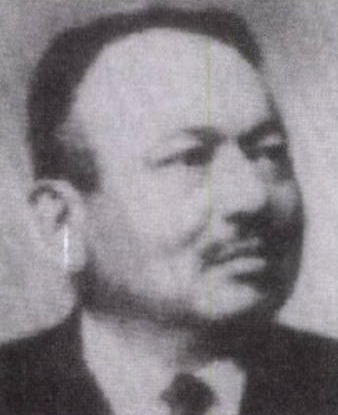
Wolf Emil was born on 2 January 1886 in Budapest. The registry of the Pest Jewish Community records that his father, Wolf Mór, was a paint wholesaler in the capital at that time. He had his own shop on Nagymező Street.
Wolf Emil completed his secondary education in Budapest. He graduated from the State Secondary School in District V in 1903 with excellent results. He then studied chemistry at universities in Munich and Berlin. He received his degree in chemical engineering in 1907. He worked as a chemist here until the end of 1909, then at a chemical factory in Tribuswinkel, also in Germany, until the summer of 1910.
He then returned to Hungary and became an employee at the Richter Gedeon factory in Kőbánya. While in Germany he had learned about the modern synthetic processes used in drug production at the time, in Kőbánya he gained experience in the use of animal organs and plant extracts. It was then that he and his university classmate, György Kereszty (1885–1937), decided to start manufacturing medicines based on modern synthetic processes. The company, named „Alka Chemical Factory, Dr. Kereszty, Dr. Wolf Chemical Engineers and Partners”, was established at 23 Petneházy Street in Angyalföld. The company received its operating licence on 7 September 1910.
The company was incorporated on 15 January 1912. Simon Krausz, a banker, was asked to be the financial investor, and he provided 250,000 crowns to the chemists. Krausz later recalled the young chemists' request in his memoirs.
Pharmaceutical production began at the end of June 1912 at a new site in Újpest, while the company was renamed „Dr. Kereszty, Dr. Wolf and Tsa Chemical Factory Ltd.”. The name „Chinoin” was adopted on 21 November 1913. With the outbreak of the First World War shortly thereafter, the company took on a role in the production of disinfectants and in supplying the chemical needs of the central powers. The company experienced real growth in the interwar period: while establishing numerous subsidiaries around the world, it began manufacturing important compounds such as insulin, vitamin C and Rubrophen, a drug used to treat tuberculosis.
With regard to Emil Wolf's public activities, it is worth noting that he also held positions in other companies. In the 1930s, he was a member of the board of directors of Agro Növényvédelmi és Mezőgazdasági Részvénytársaság (Agro Plant Protection and Agricultural Joint Stock Company) and, from the 1920s, of the Hungarian-Bulgarian Chamber of Commerce and Agriculture. At that time, he was also a member of the supervisory board of Nemzetközi Viszont- és Társbiztosító Részvénytársaság (International Mutual and Joint Insurance Joint Stock Company).
Wolf Emil's private life is documented in marriage records. His first wife was Erzsébet Eulenberg, whom he married on 17 November 1917. The couple divorced in May 1924, as ruled by the Royal Court of Justice in Budapest. He married for the second time on 18 March 1933, when he married Vilma Erzsébet Etelka Csuppay, a Roman Catholic. His wife's denomination is significant in that, according to the far-right press, he did not have to wear a yellow star in the internment camp before he was deported because of his wife. Presumably fearing the consequences of the period following the first Jewish law, he converted to the Reformed religion on 6 December 1938, according to the parish office of the Reformed Church in Újpest.
During the war years, the factory's management changed significantly: as a result of the Jewish laws, Emil Wolf submitted his resignation in 1941. He was then employed by the company at the same salary but in a lower position until his deportation to Germany (Theresienstadt) in 1944. The press reported that he survived his ordeal and returned to Hungary in June 1945.
The war and the years that followed placed significant strain on the company. The company had to offer up some of its equipment as compensation. He travelled abroad with the aim of revitalising the company's foreign relations. He died in Belgium on 15 July 1947.
After his death, the company established the Wolf Emil Award, which is given to employees for outstanding work and development. His memory is preserved by a bust in Újpest, on the corner of István út and Nyár utca. The statue was created by sculptor Dávid Tóth and unveiled on 23 September 2010, on the 100th anniversary of the founding of Chinoin.
Bibliography
BFL Budapest Capital City Archives, VIII. Institutes, institutions. 36.b Documents of the Hungarian Royal State Secondary School in Budapest's 5th district. Registers, student records.
Éva Fábián 2011: „We continue to work in his spirit”. In: Éva Vámos – Lilly Vámosné Vigyázó (eds.): Studies in the history of natural sciences, technology and medicine: Recent findings in the history of Hungarian science, technology and medicine: Developments in natural sciences, technology and medicine during the long 19th century. Budapest. 59–63.
István Hermecz: A 100-year-old innovative company: sanofi-aventis/Chinoin. Nature's World 2010/141 (12) 546–549.
Ramóna Kovács: The History of the Chinoin Pharmaceutical Factory, 1914–1945, HISTORICAL STUDIES XXXI., University of Debrecen, 2023
Vilmos Kovács: The participation of the Hungarian Army Artillery and Hungarian industry in chemical warfare, 1916–1918. Armed Forces Review, 1994, no. 1, pp. 47–48.
Ferenc Mráz et al.: The History of the Chinoin Factory. Budapest, 1964.
Great Hungarian Compass 1910-1943/1944.
Antalné Sipos – Géza Bencze – István Bikki – Dezső Korbonits 2006: A company in constant renewal: the history of Chinoin. Budapest.
Birth certificates (Familysearch.org)
Fight, 1944 (it is not clear which issue and page the photo appears on)
Born: 2 January 1886.
Place of birth: Budapest
Date of death: 15 July 1947.
Place of death: Belgium
Occupation: Chief Executive Officer
Parents: Wolf Mór, wholesaler, Löbl Mária
Spouses: Erzsébet Eulenberg (1917–1924), Vilma Erzsébet Etelka Csuppay (1933–1947)
Children:
Author: Róbert Szabó
Born: 2 January 1886.
Place of birth: Budapest
Date of death: 15 July 1947.
Place of death: Belgium
Occupation: Chief Executive Officer
Parents: Wolf Mór, wholesaler, Löbl Mária
Spouses: Erzsébet Eulenberg (1917–1924), Vilma Erzsébet Etelka Csuppay (1933–1947)
Children:
Author: Róbert Szabó
Emil Wolf
Wolf Emil was born on 2 January 1886 in Budapest. The registry of the Pest Jewish Community records that his father, Wolf Mór, was a paint wholesaler in the capital at that time. He had his own shop on Nagymező Street.
Wolf Emil completed his secondary education in Budapest. He graduated from the State Secondary School in District V in 1903 with excellent results. He then studied chemistry at universities in Munich and Berlin. He received his degree in chemical engineering in 1907. He worked as a chemist here until the end of 1909, then at a chemical factory in Tribuswinkel, also in Germany, until the summer of 1910.
He then returned to Hungary and became an employee at the Richter Gedeon factory in Kőbánya. While in Germany he had learned about the modern synthetic processes used in drug production at the time, in Kőbánya he gained experience in the use of animal organs and plant extracts. It was then that he and his university classmate, György Kereszty (1885–1937), decided to start manufacturing medicines based on modern synthetic processes. The company, named „Alka Chemical Factory, Dr. Kereszty, Dr. Wolf Chemical Engineers and Partners”, was established at 23 Petneházy Street in Angyalföld. The company received its operating licence on 7 September 1910.
The company was incorporated on 15 January 1912. Simon Krausz, a banker, was asked to be the financial investor, and he provided 250,000 crowns to the chemists. Krausz later recalled the young chemists' request in his memoirs.
Pharmaceutical production began at the end of June 1912 at a new site in Újpest, while the company was renamed „Dr. Kereszty, Dr. Wolf and Tsa Chemical Factory Ltd.”. The name „Chinoin” was adopted on 21 November 1913. With the outbreak of the First World War shortly thereafter, the company took on a role in the production of disinfectants and in supplying the chemical needs of the central powers. The company experienced real growth in the interwar period: while establishing numerous subsidiaries around the world, it began manufacturing important compounds such as insulin, vitamin C and Rubrophen, a drug used to treat tuberculosis.
With regard to Emil Wolf's public activities, it is worth noting that he also held positions in other companies. In the 1930s, he was a member of the board of directors of Agro Növényvédelmi és Mezőgazdasági Részvénytársaság (Agro Plant Protection and Agricultural Joint Stock Company) and, from the 1920s, of the Hungarian-Bulgarian Chamber of Commerce and Agriculture. At that time, he was also a member of the supervisory board of Nemzetközi Viszont- és Társbiztosító Részvénytársaság (International Mutual and Joint Insurance Joint Stock Company).
Wolf Emil's private life is documented in marriage records. His first wife was Erzsébet Eulenberg, whom he married on 17 November 1917. The couple divorced in May 1924, as ruled by the Royal Court of Justice in Budapest. He married for the second time on 18 March 1933, when he married Vilma Erzsébet Etelka Csuppay, a Roman Catholic. His wife's denomination is significant in that, according to the far-right press, he did not have to wear a yellow star in the internment camp before he was deported because of his wife. Presumably fearing the consequences of the period following the first Jewish law, he converted to the Reformed religion on 6 December 1938, according to the parish office of the Reformed Church in Újpest.
During the war years, the factory's management changed significantly: as a result of the Jewish laws, Emil Wolf submitted his resignation in 1941. He was then employed by the company at the same salary but in a lower position until his deportation to Germany (Theresienstadt) in 1944. The press reported that he survived his ordeal and returned to Hungary in June 1945.
The war and the years that followed placed significant strain on the company. The company had to offer up some of its equipment as compensation. He travelled abroad with the aim of revitalising the company's foreign relations. He died in Belgium on 15 July 1947.
After his death, the company established the Wolf Emil Award, which is given to employees for outstanding work and development. His memory is preserved by a bust in Újpest, on the corner of István út and Nyár utca. The statue was created by sculptor Dávid Tóth and unveiled on 23 September 2010, on the 100th anniversary of the founding of Chinoin.
Bibliography
BFL Budapest Capital City Archives, VIII. Institutes, institutions. 36.b Documents of the Hungarian Royal State Secondary School in Budapest's 5th district. Registers, student records.
Éva Fábián 2011: „We continue to work in his spirit”. In: Éva Vámos – Lilly Vámosné Vigyázó (eds.): Studies in the history of natural sciences, technology and medicine: Recent findings in the history of Hungarian science, technology and medicine: Developments in natural sciences, technology and medicine during the long 19th century. Budapest. 59–63.
István Hermecz: A 100-year-old innovative company: sanofi-aventis/Chinoin. Nature's World 2010/141 (12) 546–549.
Ramóna Kovács: The History of the Chinoin Pharmaceutical Factory, 1914–1945, HISTORICAL STUDIES XXXI., University of Debrecen, 2023
Vilmos Kovács: The participation of the Hungarian Army Artillery and Hungarian industry in chemical warfare, 1916–1918. Armed Forces Review, 1994, no. 1, pp. 47–48.
Ferenc Mráz et al.: The History of the Chinoin Factory. Budapest, 1964.
Great Hungarian Compass 1910-1943/1944.
Antalné Sipos – Géza Bencze – István Bikki – Dezső Korbonits 2006: A company in constant renewal: the history of Chinoin. Budapest.
Birth certificates (Familysearch.org)
Fight, 1944 (it is not clear which issue and page the photo appears on)