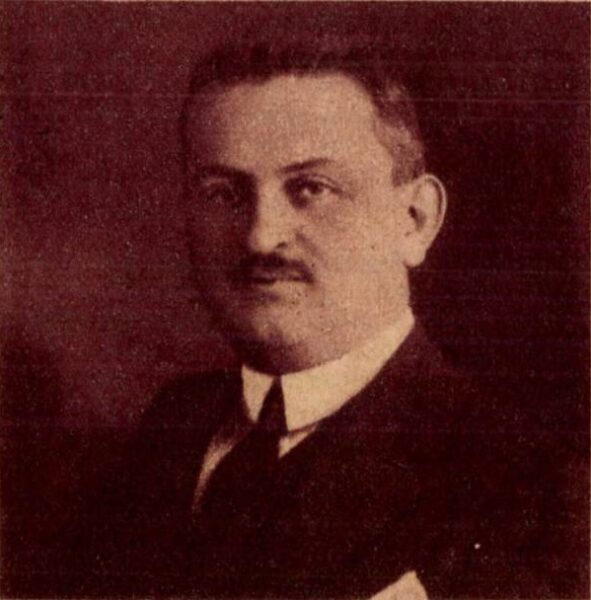
Jenő Vida (Weil)
His life
He was born in 1872 in Budapest, in a poor Jewish family. His father, Weil Dávid, his mother Schulhof Berta.
He trained as a merchant, graduating from the Budapest Commercial Academy. His wife was Klára Krishaber. They had two children, Gabriella in 1903 and Paul in 1906.
Professional career
He began his career as a trainee trader at the Grünwald & Co. distillery, on whose behalf he often travelled to the East to market Hungarian spirits.
In 1897 he was appointed as a manager of the Hungarian General Coal Mining Company, founded shortly before, in 1891. He soon became company manager, then director, and in 1914 CEO.
During the First World War, he steered the industrial development of the MÁK with a good practical sense of economic needs. The further development of the Felsőgalla Cement Factory was designed to meet the needs of the military, an investment which required no small effort in the conditions of the war economy. The fact that he was elected to the National Coal Committee and the National Central Price Inspection Committee during the war is a mark of his prestige.
As a result of the Trianon borders that closed the war, many important industrial activities ceased in Hungary, which also led to a crisis in the Hungarian coal mining sector, which had lost most of its customers. Jenő Vida did everything in his power to get the government to impose protective tariffs to protect domestic coal production and prevent coal imports. At the head of his company, he has funded a vigorous coal exploration programme to map the country's bamass coal deposits.
However, he also recognised the need to diversify the company's activities, so he invested in the exploration of bauxite deposits in Transdanubia and in 1927 he established a bauxite cement factory in Felsőgalla (north of Tatabánya). The bauxite concrete produced from it was a popular building material during the two world wars, but it turned out that its long-term properties were not good (it was fragmenting), so it was abandoned. From 1938, an aluminium smelter was therefore set up to process the bauxite.
He also explored the business opportunities in electricity supply, establishing the Pannónia Áramszolgáltató Részvénytársaság in 1929, and subsequently acquired interests in the management of a number of electricity companies that provided electricity to large areas of the Transdanubian and Great Plain regions.
After the promulgation of the third Jewish law, Jenő Vida realised that, however satisfied the shareholders were with his activities, his position in the company's management could no longer be maintained. At the meeting of the executive committee on 11 August 1941, he therefore announced his immediate resignation.
Public activities
In 1922, Governor Miklós Horthy conferred on him the title of Hungarian Royal Economic Adviser, and in 1927, when the Upper House of Parliament was formed,
In 1935 he was awarded the Grand Cross of the Hungarian Order of Merit.
He has served on a number of professional bodies, including the Honorary President of the National Association of Hungarian Industrialists, the President of the National Industrial Association and the President of the Association of Hungarian Mining and Coal Companies.
He was also very active in Jewish community life, and was president of the Jewish Boys' Home in Budapest.
Death of
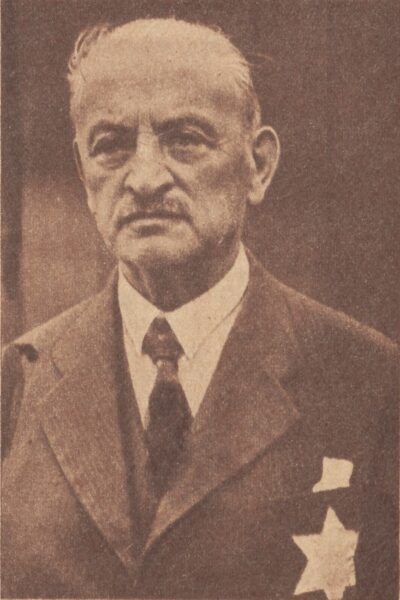
On 19 March 1944, the German army occupied Hungary. The „Gleichsaltisation” of Hungarian industry and economic life, i.e. its unhindered absorption into the Greater German economic sphere of interest, began. At the end of March, a number of Jewish tycoons were deported with their families, including the Chorin, Weiss, Mauthner, Goldberger and Vida families. After his arrest, he was transferred to Fő Street in Budapest and then to Kistarcha, where he was held until his deportation to Auschwitz on 3 November.
His villa, which he was forced to leave after his family was arrested, was seized by the Germans for military purposes and then completely looted. On the side of Gellért Hill
The villa on Bérez Street was owned by SS Obergruppenführer Otto Winckelmann, who was appointed combat commander of Budapest by Hitler on 1 December.
Jenő Vida lived to see the liberation of Auschwitz, but died of a heart attack shortly afterwards on 15 May 1945. His wife and son fled to Sao Paulo, Brazil, where Klara died in 1961.
In memory of
The shaft XI in Tatabánya bears his name. His name is commemorated on a plaque in the Hungarian Institute for Foreign Affairs and External Relations, which is located in his former villa (1016 Budapest, Bérc utca 13-15.).
Literature used
Bajkó and co-authors (1994): The history of coal mining in Tatabánya, Tatabánya Mines Company
Levente Jamrik (2023): the government renovates the former headquarters of the Nazi leader at Gellérthegy (https://index.hu/kultur/jardasziget/2023/11/07/berc-utca-vida-jeno-naci-perenyi-villa-alaut-gellerthegy-fohadiszallas-munkacsy-otto-winkelmann-ss/)
Éva Ravasz (2008):In Memory of Jenő Vida (1872-1945), Mining and Metallurgy Journals - BÁNYÁSZAT Volume 141, Number 5
Born: 30 August 1872.
Place of birth: Budapest
Date of death: 15 May 1945.
Place of death: Auschwitz
Occupation: chief executive officer
Parents: David Weil, Berta Schulhof
Spouses: Klára Krishaber
Children: Gabriella, Paul
Author: by Radnai Márton
Born: 30 August 1872.
Place of birth: Budapest
Date of death: 15 May 1945.
Place of death: Auschwitz
Occupation: chief executive officer
Parents: David Weil, Berta Schulhof
Spouses: Klára Krishaber
Children: Gabriella, Paul
Author: by Radnai Márton
Jenő Vida (Weil)
His life
He was born in 1872 in Budapest, in a poor Jewish family. His father, Weil Dávid, his mother Schulhof Berta.
He trained as a merchant, graduating from the Budapest Commercial Academy. His wife was Klára Krishaber. They had two children, Gabriella in 1903 and Paul in 1906.
Professional career
He began his career as a trainee trader at the Grünwald & Co. distillery, on whose behalf he often travelled to the East to market Hungarian spirits.
In 1897 he was appointed as a manager of the Hungarian General Coal Mining Company, founded shortly before, in 1891. He soon became company manager, then director, and in 1914 CEO.
During the First World War, he steered the industrial development of the MÁK with a good practical sense of economic needs. The further development of the Felsőgalla Cement Factory was designed to meet the needs of the military, an investment which required no small effort in the conditions of the war economy. The fact that he was elected to the National Coal Committee and the National Central Price Inspection Committee during the war is a mark of his prestige.
As a result of the Trianon borders that closed the war, many important industrial activities ceased in Hungary, which also led to a crisis in the Hungarian coal mining sector, which had lost most of its customers. Jenő Vida did everything in his power to get the government to impose protective tariffs to protect domestic coal production and prevent coal imports. At the head of his company, he has funded a vigorous coal exploration programme to map the country's bamass coal deposits.
However, he also recognised the need to diversify the company's activities, so he invested in the exploration of bauxite deposits in Transdanubia and in 1927 he established a bauxite cement factory in Felsőgalla (north of Tatabánya). The bauxite concrete produced from it was a popular building material during the two world wars, but it turned out that its long-term properties were not good (it was fragmenting), so it was abandoned. From 1938, an aluminium smelter was therefore set up to process the bauxite.
He also explored the business opportunities in electricity supply, establishing the Pannónia Áramszolgáltató Részvénytársaság in 1929, and subsequently acquired interests in the management of a number of electricity companies that provided electricity to large areas of the Transdanubian and Great Plain regions.
After the promulgation of the third Jewish law, Jenő Vida realised that, however satisfied the shareholders were with his activities, his position in the company's management could no longer be maintained. At the meeting of the executive committee on 11 August 1941, he therefore announced his immediate resignation.
Public activities
In 1922, Governor Miklós Horthy conferred on him the title of Hungarian Royal Economic Adviser, and in 1927, when the Upper House of Parliament was formed,
In 1935 he was awarded the Grand Cross of the Hungarian Order of Merit.
He has served on a number of professional bodies, including the Honorary President of the National Association of Hungarian Industrialists, the President of the National Industrial Association and the President of the Association of Hungarian Mining and Coal Companies.
He was also very active in Jewish community life, and was president of the Jewish Boys' Home in Budapest.
Death of
On 19 March 1944, the German army occupied Hungary. The „Gleichsaltisation” of Hungarian industry and economic life, i.e. its unhindered absorption into the Greater German economic sphere of interest, began. At the end of March, a number of Jewish tycoons were deported with their families, including the Chorin, Weiss, Mauthner, Goldberger and Vida families. After his arrest, he was transferred to Fő Street in Budapest and then to Kistarcha, where he was held until his deportation to Auschwitz on 3 November.
His villa, which he was forced to leave after his family was arrested, was seized by the Germans for military purposes and then completely looted. On the side of Gellért Hill
The villa on Bérez Street was owned by SS Obergruppenführer Otto Winckelmann, who was appointed combat commander of Budapest by Hitler on 1 December.
Jenő Vida lived to see the liberation of Auschwitz, but died of a heart attack shortly afterwards on 15 May 1945. His wife and son fled to Sao Paulo, Brazil, where Klara died in 1961.
In memory of
The shaft XI in Tatabánya bears his name. His name is commemorated on a plaque in the Hungarian Institute for Foreign Affairs and External Relations, which is located in his former villa (1016 Budapest, Bérc utca 13-15.).
Literature used
Bajkó and co-authors (1994): The history of coal mining in Tatabánya, Tatabánya Mines Company
Levente Jamrik (2023): the government renovates the former headquarters of the Nazi leader at Gellérthegy (https://index.hu/kultur/jardasziget/2023/11/07/berc-utca-vida-jeno-naci-perenyi-villa-alaut-gellerthegy-fohadiszallas-munkacsy-otto-winkelmann-ss/)
Éva Ravasz (2008):In Memory of Jenő Vida (1872-1945), Mining and Metallurgy Journals - BÁNYÁSZAT Volume 141, Number 5