Fülöp Weiss
Her life story
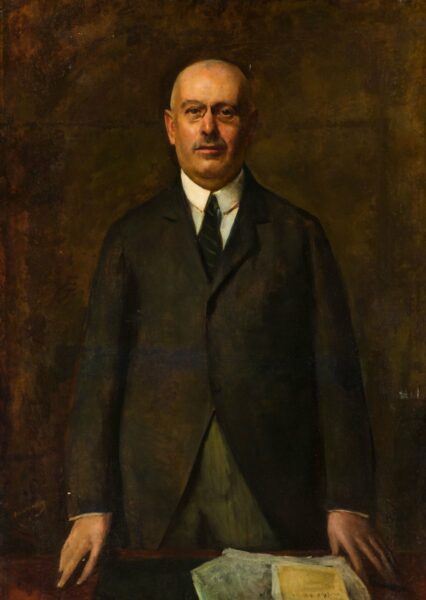
Ábrahám Weiss, cloth merchant, prominent banker and financial expert in industrialising Hungary[1] He was born in Budapest as the son of Karolin Stransky. After graduating from the Dresden Commercial Academy, he worked for several financial institutions. In 1882, he joined the Pesti Magyar Kereskedelmi Bank, from which he retired in 1938. He died unexpectedly in Zurich in 1942 during a business trip. His grave is located in the Fiumei Road Cemetery.
Fülöp Weiss, who was of Jewish descent, converted to Roman Catholicism. In 1884, he married Flóra Garai (Garay). They had two daughters. Eleonóra Weiss's first husband was Dr. Kornél Keleti, a chemical manufacturer, and her second husband was Dr. Lajos Walkó, Minister of Foreign Affairs. Mária Weiss's husband was Dr. Pál Biró, CEO and later president of the Rimamurány-Salgótarjáni Ironworks.[2]
Professional career and public activities
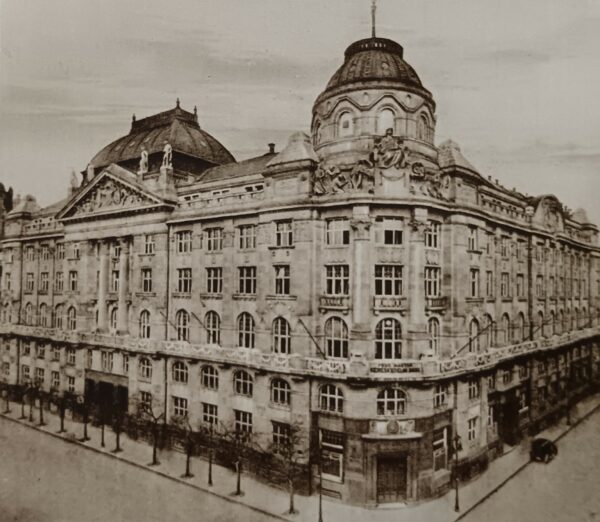
He began his professional career in 1876 at Magyar Általános Földhitel Rt. (Hungarian General Land Credit Company), where he met Leo Lánczy.[3] At the invitation of Fülöp Lánczy, Weiss joined the country's oldest financial institution, the Pesti Magyar Kereskedelmi Bank (PMKB), as a stockbroker in 1882. Under the leadership of Leó Lánczy, the PMKB adopted a new banking style, significantly expanded its business activities and modernised its operations, although its core activities remained current banking (bill discounting, advance transactions, mortgage loans). For example, the bank began to build up its branch network in the capital and the countryside, provided municipal loans, became involved in railway construction and industrial development, and extended its attention to the Balkan states. As a result of its successful transformation into a modern commercial bank, PMKB multiplied its capital and reserves and became the country's leading financial institution alongside Magyar Általános Hitelbank (MÁH).[4]
Fülöp Weiss rose quickly through the ranks of the dynamically developing bank: he became deputy director of PMKB in 1887, a member of the board of directors in 1891, chief executive officer in 1911, and vice-president in 1913.[5] His responsibilities included managing the bank's internal organisation. He played an important role in establishing the bank's relations with the Western financial world, building up the PMKB's network of corporate interests, and founding industrial companies. „His activities are exemplary of a banker who was fully aware of his responsibilities and who, regardless of sector, supported all viable companies and enterprises in the economy and ensured that their credit needs were met in line with the available financial resources.“[6] In 1913, he was a member of the boards of directors of 24 Hungarian and 12 foreign financial institutions, industrial and commercial companies.[7]
He led PMKB's expansion in the Balkans and was considered one of the best experts on the market there. PMKB's goal was to act as an intermediary in commodity, banking and securities transactions between the Balkans and Western countries. PMKB established local offices in Serbia, Romania, Bulgaria and Turkey through share purchases or partnerships, cooperating with German and French banks in penetrating the Balkan capital market. Through these local banks, PMKB participated in the mediation of state loans, the financing of commercial transactions, and the establishment and development of industrial and transport companies.[8]
He was a member of the Budapest Commodity and Stock Exchange Council between 1894 and 1908.[9] From 1909, member of the executive board of the Hungarian National Association of Industrialists[10], From 1912, he was the chair of the Hungarian National Association of Textile and Textile Chemical Manufacturers, and from 1915, he was the chair of the Hungarian National Association of Textile Manufacturers.[11]
During the First World War, Fülöp Weiss was elected to head several organisations protecting Hungarian economic interests in South-Eastern Europe. For example, he was co-chairman of the Hungarian-Bosnian and Eastern Economic Centre, founded in 1912.[12] A German-Austro-Hungarian organisation was established to collect Serbian claims arising before August 1914. The organisation maintained a joint German-Austro-Hungarian branch office in Belgrade. The chairman of the regional committee formed by Hungarian creditors was Fülöp Weiss.[13] In 1917, as president of the Hungarian Centre for Interests in Romania, he negotiated with the military authorities about setting up a representative office for the centre in Bucharest.[14]
Private economic institutions organised under the auspices of the government, known as centres, played a key role in supplying raw materials to the war economy. He was elected president of the Gypsum Centre and co-president of the Raw Materials Centres.[15] The task of each centre was to manage the collection, distribution and use of raw materials of strategic importance. In addition to mediating raw materials, the Raw Materials Centres were responsible for representing Hungarian interests in the joint Ministry of Defence and liaising with similar Austrian and German centres, but they also dealt with issues such as coordinating industrial interests regarding the procurement of raw materials after the war.[16]
Fülöp Weiss was one of the central figures of the Hungarian economy between the two world wars. In 1921, following the death of Leó Lánczy, he was elected president of the Pesti Magyar Kereskedelmi Bank (PMKB), a position he held until 1938. Under his leadership, the PMKB recovered from the losses it had suffered during the war, the revolutions, hyperinflation and the Treaty of Trianon. As a result of Weiss's prudent business policy, the stability of the PMKB was not jeopardised even during the global economic crisis, improving the bank's reputation on the international money market.
Fülöp Weiss also did much to strengthen Hungary's and the PMKB's economic relations with neighbouring countries in South-Eastern Europe.[17] He considered cooperation between Hungary and Romania particularly necessary in order to protect their agricultural interests during the Great Depression.[18]
He was a member of the Governing Board of the Hungarian National Bank from its establishment in 1924 until 1938, and was also a member of the Central Committee of Financial Institutions until 1938. In the mid-1920s, he was president of the Association of Savings Banks and Banks (TÉBE).[19]He was also a member of the governing bodies of financial institutions jointly founded by major banks in Budapest: Budapest Giro and Cash Association (founded in 1893), Hungarian Financial Institutions Mortgage Bond Issuing Association (1926), Hungarian Mortgage Institutions Association (1927), Hungarian Investment Ltd. (1931).[20]
As a member of the executive board of the Hungarian National Association of Manufacturers (1909-1938), as president and then honorary president of the Hungarian National Association of Textile Manufacturers from 1915 to 1932, and through his participation in the governing bodies of numerous industrial companies within the sphere of interest of the PMKB.[21] also had an impact on the country's industrial development[22].
He was a member of the upper house of Parliament from its establishment in 1927, appointed for life by the governor. He served on the upper house's finance and industry committees. In August 1931, he was also elected to the so-called Committee of 33, which was set up to deal with the global economic crisis.[23]
In 1930, he was elected co-chairman of the Hungarian-American Chamber of Commerce.[24] He was a member of the steering committee of the Hungarian National Pension Institute for Journalists and the board of the Société de la Nouvelle Revue de Hongrie.[25]
In 1935, he stepped down from managing day-to-day affairs at the PMKB and concentrated his efforts on his role as president.[26] He retired in 1938, but remained a member of the PMKB board of directors and also served as vice-president of Rimamurány-Salgótarjáni Vasmű rt.[27]
His personality, his supportive activities
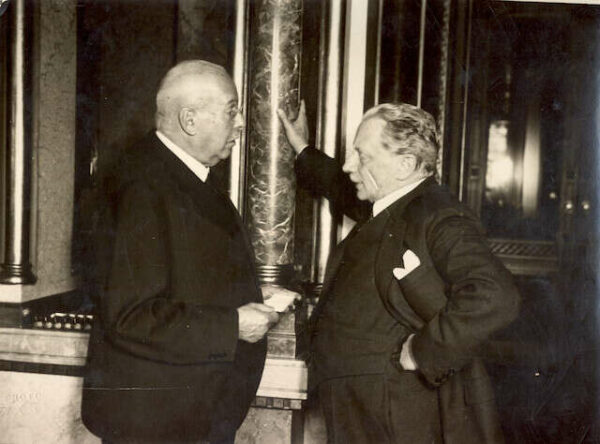
Fülöp Weiss undoubtedly belonged to the economic elite of the Horthy era: in 1935, he was the seventh highest earner,[28] yet they were not classified among the „procc Lipótváros bankers“.[29] According to his admirers, he was the embodiment of business and financial acumen, sound judgement and reliability.[30], He was characterised by extraordinary diligence, hard work and modesty, and „the solidity of his business concepts, his pursuit of reliable and lasting results, and his unconditional respect for the idols of prestige — or, as he used to say, »standing«”.[31] He was one of the most significant art collectors of his time. Some pieces from his painting collection and his wife's small sculpture collection ended up in the Museum of Fine Arts and the museum in Komárom.[32]
The Weiss Fülöp Foundation, established in 1929, could use the interest on its USD 10,000 capital to reward outstanding works or life's work. Thus, in 1932, Károly Kaán's work entitled The Problem of the Great Plain was awarded, in 1934, architect Béla Rerrich's church complex in Szeged was awarded, in 1936, Vitéz Tivadar Surányi-Unger's work entitled Hungarian National Economy and Finance was awarded, In 1941, Mihály Babits received the foundation's award.[33]
Awards
In 1899, Franz Joseph awarded Weiss Fülöp the Third Class Iron Crown Order, and in 1912, the Middle Cross of the Order of Franz Joseph with Star.[34] In May 1932, in recognition of his outstanding achievements in the fields of economics and finance, the governor awarded him the First Class Hungarian Cross of Merit. This was the highest Hungarian honour, which came with the title of „gracious“.[35]
Notes:
[1] Sándor Nádas (ed.), 99 biographies. Hungarian self-made men. Pesti Futár, Budapest, 1929, p. 138.
[2] The mourning of Fülöp Weiss. Hungarian manufacturing industry (hereinafter: MGY) 20 (1929) 1, p. 13.
[3] Fülöp Weisz's interesting speech on his 75th birthday. Hungary 42 (1 January 1935) 1, p. 16; Mihók, Sándor (ed.), Magyar Compass 1881. Financial Yearbook for Hungary and its Associated Countries, vol. 9. Budapest, 1881, p. 376.
[4] János Botos, The Journey of the First Hungarian Bank from its Establishment to Nationalisation. Reality 35 (1992) 2, pp. 34–43.
[5] Sándor Nagy Galánthai (ed.), Nagy Magyar Compass (formerly Mihók-féle) 1914/1915, vol. 42, vol. 1, Financial Institutions. Budapest, 1914 (hereinafter abbreviated according to this scheme: NMC 42/1 (1914-1915)), p. 122.
[6] János Botos, The History of the Pesti Magyar Kereskedelmi Bank (Pesti Hungarian Commercial Bank) – Láng, Budapest, 1991, p. 39.
[7] Of these, 15 were Hungarian and six were foreign industrial companies (e.g. Schlick-Nicholson Machine, Carriage and Shipbuilding Company, Budapest; Erzsébet Steam Mill Company, Budapest; Domestic Petroleum Industry Company, Budapest; Fiume Hungarian Oil Industry Company, Fiume, Hungarian Woolen Goods, Military Clothing and Blanket Factory Ltd., Zsolna, Danubius Textile Works Ltd., Pozsony, Salgótarjáni Bottle Factory Ltd., Salgótarján, Danica Chemical Industry Ltd., Kapronca, Slavonia, Máramarosi Salt Railway Co., Budapest), four Hungarian and four foreign banks (e.g. National Money Exchange Co., Budapest Giro and Cashier Association Co., Pozsony General Savings Bank Co., Kassai Mortgage Bank Ltd., Patented Bosnian-Herzegovinian Agricultural and Commercial Bank Ltd., Sarajevo), two Hungarian and one foreign insurance company (e.g. Hungarian-French Insurance Ltd.), three Hungarian transport companies (e.g. Hungarian Local Railways Ltd.) and one foreign commercial company. Tomka, Béla, Interlocking Directorates in Hungary at the Turn of the Century. Replica, 25 (1997) 1, pp. 37-46; NMC 40/1 (1912-1913) and NMC 40/2 (1912-1913); Hungary's Official Title and Name Register 1913, vol. 32. KSH, Budapest, 1913 (hereinafter: Hungary's Official Title and Name Register).
[8] Lóránt Hegedüs, The History of the Establishment and Existence of the Pesti Magyar Kereskedelmi Bank II. 1892-1917. Athenaeum, Budapest, 1917, pp. 232-252; György Kövér, Banks in Vienna and Pest in the Balkans at the Turn of the Century, in: György Kövér, The Legacy of Pesti City. Budapest, 2012, pp. 359-363; Miklós Vécsey, One Hundred Valuable Hungarians. Budapest, 1931, pp. 298-301.
[9] Relevant volumes of the Hungarian register of official titles and names.
[10] Sándor Nagy Galánthai (ed.), Mihók-féle Magyar Compass 1919/1910. Financial and Commercial Yearbook, vol. 37, part 2. Budapest, 1910, p. 739.
[11] NMC 40/2. (1913), p. 697; NMC 39/2 (1912), p. 728; NMC 44/2 (1917), p. 978.
[12] Hungarian Official Title and Name Register 1917, p. 695; Credit Protection in Serbia. MGy 6 (1 June 1916) 11, pp. 16–17.
[13] Credit protection in Serbia. MGy 6 (1 June 1916) 11, pp. 16–17; Securing Serbian demands, MGy 6 (1 July 1916) 13, p. 12; The matter of Serbian demands. MGy 6 (1 October 191) 19, p. 9.
[14] Meeting of the Centre for Interested Parties in Romania. MGy 7 (16 March 1917) 6, p. 10.
[15] The establishment of the wool centre. MGy 6 (16 February 1916) 4, p. 35.
[16] Raw material centre. MGy 6 (16 February 1916) 4, p. 33; Raw material imports from Ukraine. MGy 8 (1 March 1918) 5, pp. 11–12; Raw material procurement after the war MGy 6 (1 November 1916) 21, pp. 8–9.
[17] Weisz Fülöp conveys an English loan to Belgrade. Pesti Napló 78 (18 March 1927) 63, p. 3; represented the interests of PMKB, for example, on the boards of Erdélyi Bank- és Takarékpénztár rt., Petroşani Kőszénbánya Rt. and Dacia-Romania Biztositó Rt. Cluj Mirror/Inspector 18 (17 March 1931) 3–4), p. 36.
[18] Trockij is incorrect in his assessment of dumping. Opposition 52 (1 April 1931) 75, p. 2; Weiss Fülöp: “I trust that European states will find a way to cooperate in the face of Russian Soviet political ambitions and dumping policies.”.” Keleti Újság 14 (1 April 1930) 74, p. 9.
[19] NMC 50/1 (1925–1926), p. 240.
[20] NMC 56/1 (1932), pp. 187, 429, 535.
[21] In 1938, Fülöp Weiss was appointed to the boards of directors of the following Hungarian industrial companies: President were: Upper Hungarian Mining and Smelting Company, Szolnok Sugar Factory, First Hungarian Agricultural Machinery Factory, Domestic Paper Factory, Csepel Combing and Spinning Factory, Hungarian Wool and Cotton Factory, Hungarian Post Office Factory., vice-president: Rimamurány-Salgótarjáni Ironworks Ltd., board member: Salgótarján Coal Mine Ltd., Bácsmegyei Agricultural Ltd., Hungarian-Egyptian Trading Ltd., First Budapest Steam Mill Ltd. NMC 62/2 (1938).
[22] He was elected president of the Hungarian Foreign Trade Institute Ltd., which was established in 1929 to support industrial exports; from 1932, he continued to support the work of the organisation as a member of the board of directors. He was a member of the commercial education section of the National Industrial and Commercial Education Council, which functioned as a ministerial advisory body, from 1929 to 1935, and a member of the National Industrial Council from 1931 to 1935. Relevant volumes of the Hungarian register of official titles and names.
[23] The Parliamentary Almanac, relevant volumes of the Upper House's journals and writings.
[24] Re-establishment of the Hungarian-American Chamber of Commerce. MGy 21 (1 January 1930), 1, p. 8.
[25] István Haeffler (ed.), Almanac of the National Assembly for the 1939–44 parliamentary term. Budapest, 1940, p. 596; NMC 62/2 (1938), p. 425.
[26] Fülöp Weiss was warmly celebrated at the general meeting of the Commercial Bank. Hungarian Lloyd 7 (9 February 1935) 6, p. 3.
[27] Philip Weiss. MGy 29 (1 July 1938) 7, p. 8.
[28] Ágnes Pogány, The Wealth and Income Elite of the Horthy Era. Income Conditions in Hungary between the Two World Wars. Rubicon 18 (2007) 4–5, pp. 26–31.
[29] György Lengyel, Entrepreneurs, Bankers, Merchants. The Hungarian Economic Elite in the 19th Century and the First Half of the 20th Century. Magvető, Budapest, 1989, p. 80.
[30] Fülöp Weiss's award. MGy 23 (1 May 1932) 5, p. 7.
[31] The death of Philip Weiss. MGy 33 (20 April 1942) 4, p. 8; Intimacies from the lives of Pest bankers. Színházi Élet 19 (24 February 1929) 9, p. 44; His Excellency Fülöp Weisz. Morning Newspaper 4 (23 May 1932), 21, p. 8.
[32] https://www.kieselbach.hu/mugyujto/2162-weisz-weiss-fulop
[33] Relevant volumes of the Akadémiai Értesítő (Academic Bulletin); Ágnes Széchenyi, Patrons in 20th-century Hungarian literature and culture. Bridge 80 (2016) 6, pp. 99–114, p. 107; Pál Darabos, Károlyné Domsa (eds.), Az Akadémiai Értesítő és a Magyar Tudomány indexe 1840–1970, M–R. Budapest, 1975, p. 535.
[34] Honours awarded to Henrik Fellner and Fülöp Weiss. MGy 2 (16 August 1912) 16, p. 10, Géza Szentmiklóssy (ed.), A magyar feltámadás lexikona [Encyclopaedia of the Hungarian Revival]. Budapest, 1930, p. 1130; Magyarország tiszti cím- és névtára [Directory of Hungarian Officers] 1913, p. 30.
[35] Fülöp Weiss's award. MGy 23 (1 May 1932) 5, p. 7.
Born: 31 December 1859.
Place of birth: Budapest
Date of death: 28 March 1942.
Place of death: Zurich
Occupation: banker
Parents: Ábrahám Weiss, Karolin Stransky
Spouses: Flóra Garay
Children: Eleonóra Weisz, Mária Weisz
Author: by Hidvégi Mária
Born: 31 December 1859.
Place of birth: Budapest
Date of death: 28 March 1942.
Place of death: Zurich
Occupation: banker
Parents: Ábrahám Weiss, Karolin Stransky
Spouses: Flóra Garay
Children: Eleonóra Weisz, Mária Weisz
Author: by Hidvégi Mária
Fülöp Weiss
Her life story
Ábrahám Weiss, cloth merchant, prominent banker and financial expert in industrialising Hungary[1] He was born in Budapest as the son of Karolin Stransky. After graduating from the Dresden Commercial Academy, he worked for several financial institutions. In 1882, he joined the Pesti Magyar Kereskedelmi Bank, from which he retired in 1938. He died unexpectedly in Zurich in 1942 during a business trip. His grave is located in the Fiumei Road Cemetery.
Fülöp Weiss, who was of Jewish descent, converted to Roman Catholicism. In 1884, he married Flóra Garai (Garay). They had two daughters. Eleonóra Weiss's first husband was Dr. Kornél Keleti, a chemical manufacturer, and her second husband was Dr. Lajos Walkó, Minister of Foreign Affairs. Mária Weiss's husband was Dr. Pál Biró, CEO and later president of the Rimamurány-Salgótarjáni Ironworks.[2]
Professional career and public activities
He began his professional career in 1876 at Magyar Általános Földhitel Rt. (Hungarian General Land Credit Company), where he met Leo Lánczy.[3] At the invitation of Fülöp Lánczy, Weiss joined the country's oldest financial institution, the Pesti Magyar Kereskedelmi Bank (PMKB), as a stockbroker in 1882. Under the leadership of Leó Lánczy, the PMKB adopted a new banking style, significantly expanded its business activities and modernised its operations, although its core activities remained current banking (bill discounting, advance transactions, mortgage loans). For example, the bank began to build up its branch network in the capital and the countryside, provided municipal loans, became involved in railway construction and industrial development, and extended its attention to the Balkan states. As a result of its successful transformation into a modern commercial bank, PMKB multiplied its capital and reserves and became the country's leading financial institution alongside Magyar Általános Hitelbank (MÁH).[4]
Fülöp Weiss rose quickly through the ranks of the dynamically developing bank: he became deputy director of PMKB in 1887, a member of the board of directors in 1891, chief executive officer in 1911, and vice-president in 1913.[5] His responsibilities included managing the bank's internal organisation. He played an important role in establishing the bank's relations with the Western financial world, building up the PMKB's network of corporate interests, and founding industrial companies. „His activities are exemplary of a banker who was fully aware of his responsibilities and who, regardless of sector, supported all viable companies and enterprises in the economy and ensured that their credit needs were met in line with the available financial resources.“[6] In 1913, he was a member of the boards of directors of 24 Hungarian and 12 foreign financial institutions, industrial and commercial companies.[7]
He led PMKB's expansion in the Balkans and was considered one of the best experts on the market there. PMKB's goal was to act as an intermediary in commodity, banking and securities transactions between the Balkans and Western countries. PMKB established local offices in Serbia, Romania, Bulgaria and Turkey through share purchases or partnerships, cooperating with German and French banks in penetrating the Balkan capital market. Through these local banks, PMKB participated in the mediation of state loans, the financing of commercial transactions, and the establishment and development of industrial and transport companies.[8]
He was a member of the Budapest Commodity and Stock Exchange Council between 1894 and 1908.[9] From 1909, member of the executive board of the Hungarian National Association of Industrialists[10], From 1912, he was the chair of the Hungarian National Association of Textile and Textile Chemical Manufacturers, and from 1915, he was the chair of the Hungarian National Association of Textile Manufacturers.[11]
During the First World War, Fülöp Weiss was elected to head several organisations protecting Hungarian economic interests in South-Eastern Europe. For example, he was co-chairman of the Hungarian-Bosnian and Eastern Economic Centre, founded in 1912.[12] A German-Austro-Hungarian organisation was established to collect Serbian claims arising before August 1914. The organisation maintained a joint German-Austro-Hungarian branch office in Belgrade. The chairman of the regional committee formed by Hungarian creditors was Fülöp Weiss.[13] In 1917, as president of the Hungarian Centre for Interests in Romania, he negotiated with the military authorities about setting up a representative office for the centre in Bucharest.[14]
Private economic institutions organised under the auspices of the government, known as centres, played a key role in supplying raw materials to the war economy. He was elected president of the Gypsum Centre and co-president of the Raw Materials Centres.[15] The task of each centre was to manage the collection, distribution and use of raw materials of strategic importance. In addition to mediating raw materials, the Raw Materials Centres were responsible for representing Hungarian interests in the joint Ministry of Defence and liaising with similar Austrian and German centres, but they also dealt with issues such as coordinating industrial interests regarding the procurement of raw materials after the war.[16]
Fülöp Weiss was one of the central figures of the Hungarian economy between the two world wars. In 1921, following the death of Leó Lánczy, he was elected president of the Pesti Magyar Kereskedelmi Bank (PMKB), a position he held until 1938. Under his leadership, the PMKB recovered from the losses it had suffered during the war, the revolutions, hyperinflation and the Treaty of Trianon. As a result of Weiss's prudent business policy, the stability of the PMKB was not jeopardised even during the global economic crisis, improving the bank's reputation on the international money market.
Fülöp Weiss also did much to strengthen Hungary's and the PMKB's economic relations with neighbouring countries in South-Eastern Europe.[17] He considered cooperation between Hungary and Romania particularly necessary in order to protect their agricultural interests during the Great Depression.[18]
He was a member of the Governing Board of the Hungarian National Bank from its establishment in 1924 until 1938, and was also a member of the Central Committee of Financial Institutions until 1938. In the mid-1920s, he was president of the Association of Savings Banks and Banks (TÉBE).[19]He was also a member of the governing bodies of financial institutions jointly founded by major banks in Budapest: Budapest Giro and Cash Association (founded in 1893), Hungarian Financial Institutions Mortgage Bond Issuing Association (1926), Hungarian Mortgage Institutions Association (1927), Hungarian Investment Ltd. (1931).[20]
As a member of the executive board of the Hungarian National Association of Manufacturers (1909-1938), as president and then honorary president of the Hungarian National Association of Textile Manufacturers from 1915 to 1932, and through his participation in the governing bodies of numerous industrial companies within the sphere of interest of the PMKB.[21] also had an impact on the country's industrial development[22].
He was a member of the upper house of Parliament from its establishment in 1927, appointed for life by the governor. He served on the upper house's finance and industry committees. In August 1931, he was also elected to the so-called Committee of 33, which was set up to deal with the global economic crisis.[23]
In 1930, he was elected co-chairman of the Hungarian-American Chamber of Commerce.[24] He was a member of the steering committee of the Hungarian National Pension Institute for Journalists and the board of the Société de la Nouvelle Revue de Hongrie.[25]
In 1935, he stepped down from managing day-to-day affairs at the PMKB and concentrated his efforts on his role as president.[26] He retired in 1938, but remained a member of the PMKB board of directors and also served as vice-president of Rimamurány-Salgótarjáni Vasmű rt.[27]
His personality, his supportive activities
Fülöp Weiss undoubtedly belonged to the economic elite of the Horthy era: in 1935, he was the seventh highest earner,[28] yet they were not classified among the „procc Lipótváros bankers“.[29] According to his admirers, he was the embodiment of business and financial acumen, sound judgement and reliability.[30], He was characterised by extraordinary diligence, hard work and modesty, and „the solidity of his business concepts, his pursuit of reliable and lasting results, and his unconditional respect for the idols of prestige — or, as he used to say, »standing«”.[31] He was one of the most significant art collectors of his time. Some pieces from his painting collection and his wife's small sculpture collection ended up in the Museum of Fine Arts and the museum in Komárom.[32]
The Weiss Fülöp Foundation, established in 1929, could use the interest on its USD 10,000 capital to reward outstanding works or life's work. Thus, in 1932, Károly Kaán's work entitled The Problem of the Great Plain was awarded, in 1934, architect Béla Rerrich's church complex in Szeged was awarded, in 1936, Vitéz Tivadar Surányi-Unger's work entitled Hungarian National Economy and Finance was awarded, In 1941, Mihály Babits received the foundation's award.[33]
Awards
In 1899, Franz Joseph awarded Weiss Fülöp the Third Class Iron Crown Order, and in 1912, the Middle Cross of the Order of Franz Joseph with Star.[34] In May 1932, in recognition of his outstanding achievements in the fields of economics and finance, the governor awarded him the First Class Hungarian Cross of Merit. This was the highest Hungarian honour, which came with the title of „gracious“.[35]
Notes:
[1] Sándor Nádas (ed.), 99 biographies. Hungarian self-made men. Pesti Futár, Budapest, 1929, p. 138.
[2] The mourning of Fülöp Weiss. Hungarian manufacturing industry (hereinafter: MGY) 20 (1929) 1, p. 13.
[3] Fülöp Weisz's interesting speech on his 75th birthday. Hungary 42 (1 January 1935) 1, p. 16; Mihók, Sándor (ed.), Magyar Compass 1881. Financial Yearbook for Hungary and its Associated Countries, vol. 9. Budapest, 1881, p. 376.
[4] János Botos, The Journey of the First Hungarian Bank from its Establishment to Nationalisation. Reality 35 (1992) 2, pp. 34–43.
[5] Sándor Nagy Galánthai (ed.), Nagy Magyar Compass (formerly Mihók-féle) 1914/1915, vol. 42, vol. 1, Financial Institutions. Budapest, 1914 (hereinafter abbreviated according to this scheme: NMC 42/1 (1914-1915)), p. 122.
[6] János Botos, The History of the Pesti Magyar Kereskedelmi Bank (Pesti Hungarian Commercial Bank) – Láng, Budapest, 1991, p. 39.
[7] Of these, 15 were Hungarian and six were foreign industrial companies (e.g. Schlick-Nicholson Machine, Carriage and Shipbuilding Company, Budapest; Erzsébet Steam Mill Company, Budapest; Domestic Petroleum Industry Company, Budapest; Fiume Hungarian Oil Industry Company, Fiume, Hungarian Woolen Goods, Military Clothing and Blanket Factory Ltd., Zsolna, Danubius Textile Works Ltd., Pozsony, Salgótarjáni Bottle Factory Ltd., Salgótarján, Danica Chemical Industry Ltd., Kapronca, Slavonia, Máramarosi Salt Railway Co., Budapest), four Hungarian and four foreign banks (e.g. National Money Exchange Co., Budapest Giro and Cashier Association Co., Pozsony General Savings Bank Co., Kassai Mortgage Bank Ltd., Patented Bosnian-Herzegovinian Agricultural and Commercial Bank Ltd., Sarajevo), two Hungarian and one foreign insurance company (e.g. Hungarian-French Insurance Ltd.), three Hungarian transport companies (e.g. Hungarian Local Railways Ltd.) and one foreign commercial company. Tomka, Béla, Interlocking Directorates in Hungary at the Turn of the Century. Replica, 25 (1997) 1, pp. 37-46; NMC 40/1 (1912-1913) and NMC 40/2 (1912-1913); Hungary's Official Title and Name Register 1913, vol. 32. KSH, Budapest, 1913 (hereinafter: Hungary's Official Title and Name Register).
[8] Lóránt Hegedüs, The History of the Establishment and Existence of the Pesti Magyar Kereskedelmi Bank II. 1892-1917. Athenaeum, Budapest, 1917, pp. 232-252; György Kövér, Banks in Vienna and Pest in the Balkans at the Turn of the Century, in: György Kövér, The Legacy of Pesti City. Budapest, 2012, pp. 359-363; Miklós Vécsey, One Hundred Valuable Hungarians. Budapest, 1931, pp. 298-301.
[9] Relevant volumes of the Hungarian register of official titles and names.
[10] Sándor Nagy Galánthai (ed.), Mihók-féle Magyar Compass 1919/1910. Financial and Commercial Yearbook, vol. 37, part 2. Budapest, 1910, p. 739.
[11] NMC 40/2. (1913), p. 697; NMC 39/2 (1912), p. 728; NMC 44/2 (1917), p. 978.
[12] Hungarian Official Title and Name Register 1917, p. 695; Credit Protection in Serbia. MGy 6 (1 June 1916) 11, pp. 16–17.
[13] Credit protection in Serbia. MGy 6 (1 June 1916) 11, pp. 16–17; Securing Serbian demands, MGy 6 (1 July 1916) 13, p. 12; The matter of Serbian demands. MGy 6 (1 October 191) 19, p. 9.
[14] Meeting of the Centre for Interested Parties in Romania. MGy 7 (16 March 1917) 6, p. 10.
[15] The establishment of the wool centre. MGy 6 (16 February 1916) 4, p. 35.
[16] Raw material centre. MGy 6 (16 February 1916) 4, p. 33; Raw material imports from Ukraine. MGy 8 (1 March 1918) 5, pp. 11–12; Raw material procurement after the war MGy 6 (1 November 1916) 21, pp. 8–9.
[17] Weisz Fülöp conveys an English loan to Belgrade. Pesti Napló 78 (18 March 1927) 63, p. 3; represented the interests of PMKB, for example, on the boards of Erdélyi Bank- és Takarékpénztár rt., Petroşani Kőszénbánya Rt. and Dacia-Romania Biztositó Rt. Cluj Mirror/Inspector 18 (17 March 1931) 3–4), p. 36.
[18] Trockij is incorrect in his assessment of dumping. Opposition 52 (1 April 1931) 75, p. 2; Weiss Fülöp: “I trust that European states will find a way to cooperate in the face of Russian Soviet political ambitions and dumping policies.”.” Keleti Újság 14 (1 April 1930) 74, p. 9.
[19] NMC 50/1 (1925–1926), p. 240.
[20] NMC 56/1 (1932), pp. 187, 429, 535.
[21] In 1938, Fülöp Weiss was appointed to the boards of directors of the following Hungarian industrial companies: President were: Upper Hungarian Mining and Smelting Company, Szolnok Sugar Factory, First Hungarian Agricultural Machinery Factory, Domestic Paper Factory, Csepel Combing and Spinning Factory, Hungarian Wool and Cotton Factory, Hungarian Post Office Factory., vice-president: Rimamurány-Salgótarjáni Ironworks Ltd., board member: Salgótarján Coal Mine Ltd., Bácsmegyei Agricultural Ltd., Hungarian-Egyptian Trading Ltd., First Budapest Steam Mill Ltd. NMC 62/2 (1938).
[22] He was elected president of the Hungarian Foreign Trade Institute Ltd., which was established in 1929 to support industrial exports; from 1932, he continued to support the work of the organisation as a member of the board of directors. He was a member of the commercial education section of the National Industrial and Commercial Education Council, which functioned as a ministerial advisory body, from 1929 to 1935, and a member of the National Industrial Council from 1931 to 1935. Relevant volumes of the Hungarian register of official titles and names.
[23] The Parliamentary Almanac, relevant volumes of the Upper House's journals and writings.
[24] Re-establishment of the Hungarian-American Chamber of Commerce. MGy 21 (1 January 1930), 1, p. 8.
[25] István Haeffler (ed.), Almanac of the National Assembly for the 1939–44 parliamentary term. Budapest, 1940, p. 596; NMC 62/2 (1938), p. 425.
[26] Fülöp Weiss was warmly celebrated at the general meeting of the Commercial Bank. Hungarian Lloyd 7 (9 February 1935) 6, p. 3.
[27] Philip Weiss. MGy 29 (1 July 1938) 7, p. 8.
[28] Ágnes Pogány, The Wealth and Income Elite of the Horthy Era. Income Conditions in Hungary between the Two World Wars. Rubicon 18 (2007) 4–5, pp. 26–31.
[29] György Lengyel, Entrepreneurs, Bankers, Merchants. The Hungarian Economic Elite in the 19th Century and the First Half of the 20th Century. Magvető, Budapest, 1989, p. 80.
[30] Fülöp Weiss's award. MGy 23 (1 May 1932) 5, p. 7.
[31] The death of Philip Weiss. MGy 33 (20 April 1942) 4, p. 8; Intimacies from the lives of Pest bankers. Színházi Élet 19 (24 February 1929) 9, p. 44; His Excellency Fülöp Weisz. Morning Newspaper 4 (23 May 1932), 21, p. 8.
[32] https://www.kieselbach.hu/mugyujto/2162-weisz-weiss-fulop
[33] Relevant volumes of the Akadémiai Értesítő (Academic Bulletin); Ágnes Széchenyi, Patrons in 20th-century Hungarian literature and culture. Bridge 80 (2016) 6, pp. 99–114, p. 107; Pál Darabos, Károlyné Domsa (eds.), Az Akadémiai Értesítő és a Magyar Tudomány indexe 1840–1970, M–R. Budapest, 1975, p. 535.
[34] Honours awarded to Henrik Fellner and Fülöp Weiss. MGy 2 (16 August 1912) 16, p. 10, Géza Szentmiklóssy (ed.), A magyar feltámadás lexikona [Encyclopaedia of the Hungarian Revival]. Budapest, 1930, p. 1130; Magyarország tiszti cím- és névtára [Directory of Hungarian Officers] 1913, p. 30.
[35] Fülöp Weiss's award. MGy 23 (1 May 1932) 5, p. 7.